As India strives for universal electrification, energy access in rural areas remains a challenge. Millions still rely on biomass, kerosene, or diesel generators, which are both environmentally damaging and economically inefficient. Amid this gap, hydrogen—particularly green hydrogen—is emerging as a transformative, decentralized energy source tailored for rural India’s needs.
The Rural Energy Dilemma
Rural India faces two core energy problems: unreliability and lack of clean sources. Grid extension to remote areas is often financially unviable due to scattered populations and difficult terrains. Diesel generators, commonly used as backup, are costly and polluting. Solar power, while gaining popularity, suffers from intermittency and storage challenges.
The need is clear: a clean, reliable, and scalable energy solution that can operate independently of the central grid. Hydrogen technology offers just that.
Why Hydrogen Makes Sense for Rural Deployment
Hydrogen offers multiple advantages when deployed at a local level. First, it enables long-duration energy storage, solving the intermittency issue of renewables like solar or wind. Second, it can power not only homes but also water pumps, small industries, and local transportation.
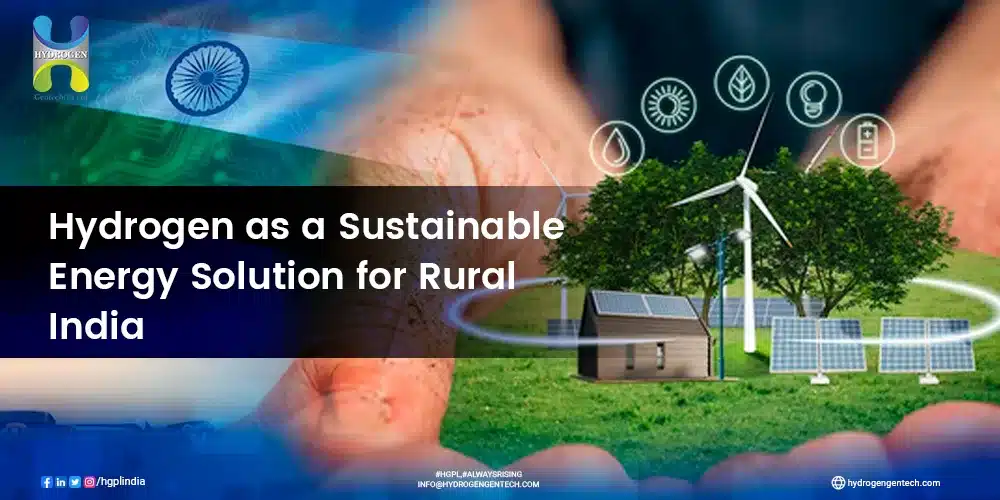
Electrolyzers powered by solar or wind can generate hydrogen on-site, which can be stored in tanks and used via fuel cells to produce electricity on demand. This model creates a closed-loop microgrid with zero emissions and local ownership.
Applications of Hydrogen in Rural Settings
In rural areas, energy demand is more diversified. Households need electricity for lighting, appliances, and cooking. Farms need power for irrigation and cold storage. Local enterprises require a steady power supply for small-scale manufacturing, agro-processing, or carpentry.
Hydrogen can fulfill all these demands:
- Electricity generation using hydrogen fuel cells for homes and small businesses
- Hydrogen-powered irrigation pumps to support farming activities
- Cold chains and refrigeration units in agri-supply chains
- Fuel for rural transport fleets such as e-rickshaws, small goods carriers, and tractors
Technology Enablers: On-Site Hydrogen Generation
Decentralized hydrogen production is key to rural energy adoption. With falling solar prices and compact electrolyzer technology, villages can install standalone hydrogen units that work in tandem with existing solar mini-grids. These systems generate hydrogen during the day and convert it into power when needed—eliminating the need for expensive batteries or diesel backups.
The BoP (Balance of Plant) systems such as purification units, dryers, and compressors can be skid-mounted and require minimal maintenance, making them viable even in remote terrains. Advanced automation and IoT integration allow remote monitoring and diagnostics.
Policy Support and Government Push
India’s National Green Hydrogen Mission explicitly recognizes the role of hydrogen in distributed rural energy systems. The government is expected to roll out pilot projects in backward regions, especially where grid penetration is low but solar potential is high. Subsidies, viability gap funding, and public-private partnerships will be key drivers.
In addition, initiatives like the PM-KUSUM scheme, which already promotes solar pumps, can be extended to include hydrogen-powered alternatives. This integration will further accelerate hydrogen adoption at the grassroots level.
Socio-Economic Impact of Rural Hydrogen Adoption
The ripple effects of hydrogen adoption in villages go far beyond energy. It improves health outcomes by replacing smoky biomass with clean fuel. It increases agricultural productivity through reliable irrigation. It supports rural entrepreneurship and job creation by powering small businesses.
Moreover, local hydrogen microgrids can be community-owned, empowering Panchayats or farmer groups to generate, manage, and monetize energy locally. This shift builds self-reliance, reduces migration to urban areas, and creates a foundation for rural industrialization.
Addressing the Challenges
Hydrogen adoption in rural areas faces challenges—cost, awareness, and technical capacity being key among them. Initial capex is high, although falling rapidly. Villagers need education on safety and operation of hydrogen systems. Local technicians must be trained in system maintenance.
Public awareness campaigns, skill development programs, and state-level policy frameworks will be essential to address these barriers. Companies like Hydrogen Gentech can play a catalytic role by offering modular, pre-engineered hydrogen solutions bundled with training and after-sales support.
Hydrogen is no longer a solution for the future. For India’s rural energy landscape, it represents a present-day opportunity to leapfrog into a clean, resilient, and locally governed energy era. As policy, technology, and economics align, hydrogen can redefine how India powers its villages—not just with electricity, but with dignity, productivity, and sustainability.
Hydrogen Gentech Private Limited (HGPL) is committed to democratizing access to clean energy. Our compact hydrogen generation units, purification systems, and turnkey EPC services are engineered for decentralized applications. Partner with us to bring India’s hydrogen-powered rural revolution to life.

 (+91)-9818-744-776